Zoeken
  • Clinical Laboratory Services Market: Top Manufacturers and Their Contributions to Industry Growth, Forecast by 2033

    Global Clinical Laboratory Services Market Snapshot:
    A new report titled “Global Clinical Laboratory Services Market” has been added to its vast repository by Straits Research. The report analyzes and estimates the market on a global, regional, and country level. The report offers data from previous years along with an in-depth analysis from 2025 to 2033 on the basis of revenue (USD Billion or Million). Besides, the report offers a comprehensive analysis of the factors driving and restraining the growth of the market, coupled with the impact they have on the demand over the forecast period. In addition, the report includes the study of lucrative opportunities available in the Clinical Laboratory Services market on a global level.

    According to StraitsResearch, the global clinical laboratory services market size is valued at USD 240.73 billion in 2024 and is estimated to reach USD 363.95 billion by 2033, growing at a CAGR of 4.7% during 2025-2033.

    . This report forecasts revenue growth at the global, regional, and local levels and provides an analysis of the most recent industry trends from 2025 to 2033 in each of the segments and sub-segments. Some of the major geographies included in the market are given below:

    North America(U.S., Canada)
    Europe(U.K., Germany, France, Italy)
    Asia Pacific(China, India, Japan, Singapore, Malaysia)
    Latin America(Brazil, Mexico)
    Middle East & Africa
    Request Sample Report of Global Market @ https://straitsresearch.com/report/clinical-laboratory-services-market/request-sample

    Top Key Industry Players:
    QIAGEN
    Novartis AG
    Quest Diagnostics
    Abbott
    OPKO Health Inc.
    Charles River Laboratories
    Cinven
    ARUP Laboratories
    Sonic Healthcare
    Laboratory Corporation of America Holdings
    NeoGenomics Laboratories Inc.
    Fresenius Medical Care AG and Co. KGaA
    DaVita Inc.
    Siemens Healthcare Limited
    Vimpath Group LLP
    SGS SA
    Almac Group
    The report helps businesses get a thorough understanding of the industry landscape by providing a comprehensive examination of the key business opportunities, global trends, and supply-demand scope. In addition, the study gives an in-depth overview of the market revenue, status demand, competitive landscape, and regional assessment on a global scale. It is an important value addition for any company looking to develop effective business strategies and begin transformative growth.

    The market is segmented into different sections such as: by product type, by application, by end-users, by deployment mode, and by key geography. The report then employs market breakdown and data triangulation procedures to complete the overall market engineering process and arrive at the exact statistics for all segments and sub-segments. The report on the Global Clinical Laboratory Services Market has been curated by analyzing the top players functioning in the market. In order to get an in-depth analysis of the market, the report carried out a SWOT analysis, Porter’s five forces analysis, and PESTEL analysis.

    Clinical Laboratory Services Market Segmentation:
    By Test Type
    Human and Tumor Genetics
    Clinical Chemistry
    Medical Microbiology and Cytology
    Other Esoteric Tests
    By Service Provider
    Hospital-Based Laboratories
    Stand-Alone Laboratories
    Clinic-Based Laboratories
    By Application
    Bioanalytical and Lab Chemistry Services
    Toxicology Testing Services
    Cell and Gene Therapy Related Services
    Preclinical and Clinical Trial Related Services
    Drug Discovery and Development Related Services
    Other Clinical Laboratory Services
    Get Detailed Market Segmentation @ https://straitsresearch.com/report/clinical-laboratory-services-market/segmentation

    Global Regional Outlook:
    North America: North America is currently the largest market for Clinical Laboratory Services, accounting for a significant share of the global market.

    Europe: While the North America leads in market size, Europe is emerging as the fastest growing region in the Clinical Laboratory Services market.

    Key Questions Answered in the Report:
    What is the current scenario of the Global Clinical Laboratory Services industry? How is the market going to prosper throughout the next 5 years?
    What is the historical and current size of the Global Clinical Laboratory Services Market?
    Which segments are the fastest growing and the largest in the market? What is their market potential?
    What are the driving factors contributing to the market growth during the short, medium, and long term?
    What are the lucrative opportunities for the key players in the market?
    Which are the key geographies from the investment perspective?
    What are the major strategies adopted by the leading players to expand their market shares?
    What are sales, revenue, and price analysis by types and applications of the market?
    Request Customized Copy of Report @ https://straitsresearch.com/buy-now/clinical-laboratory-services-market

    About Us:

    Straits Research is a leading market research and market intelligence organization, specializing in research, analytics, and advisory services along with providing business insights & market research reports.

    Contact Us:

    Email: sales@straitsresearch.com

    Tel: +1 646 905 0080 (U.S.), +44 203 695 0070 (U.K.)
    Clinical Laboratory Services Market Size, Trends & Growth Report 2033
    Request Free Sample : The global clinical laboratory services market size is projected to grow from USD 252.04 billion in 2025 to USD 363.95 billion by 2033, exhibiting a CAGR of 4.7%.
    STRAITSRESEARCH.COM
    0 0 Reacties 0 Aandelen
  • Achieving Human Centric Workplaces in the Age of AI for Workplace Transformation

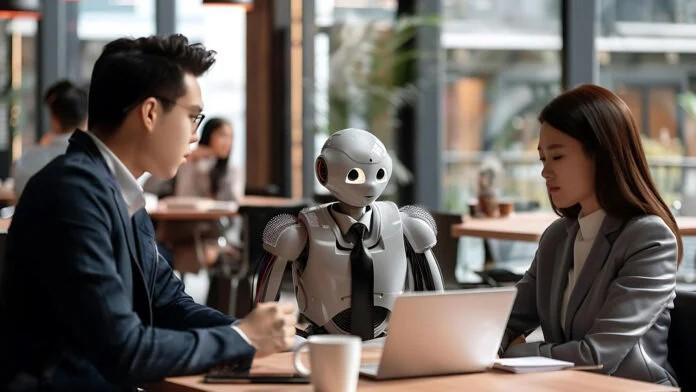
    As artificial intelligence continues to reshape the workplace, its influence is expanding well beyond productivity tools and task automation. In fact, employees that reported using AI in their role a few times a year or more jumped from 21% to 40% over the past two years.

    Heading into 2026, AI is increasingly tied to how workplaces remain functional under pressures like aging infrastructure and tightening budgets. While use cases for AI continue to expand, leaders must prioritize flexible workplace design that keeps human needs at the center to ensure employee satisfaction and productivity.

    Humans At the Center

    A human-centric workplace prioritizes human needs including employee well-being, purpose, and connection as the foundation of the work experience. Technology is meant to support human value, not replace it.

    AI, when implemented properly, can help eliminate friction from daily work, automate repetitive tasks, deliver insights that improve decision making, and ensure the physical environment remains in peak condition for its occupants. But the goal isn’t more technology; it’s using technology so people can focus on creativity, problem solving, and meaningful interactions.

    Navigating AI Adoption in The Workplace

    Encouraging AI adoption requires positioning AI as an enabler of human potential, not a substitute for it. In a time where the nature of work is changing dramatically, this framing helps overcome skepticism and adoption pushback.

    One of the biggest challenges organizations face is the risk of over-automation: leaning too heavily on AI and removing the “human” element that employees value. Another is the rapid introduction of tools without clear communication, which can overwhelm employees and create resistance. Without proper guidance, employees may see AI as something being imposed on them, rather than something designed to support their success. AI needs to be paired with a purpose for successful adoption.

    Overcoming resistance requires honest communication about AI’s uses and benefits. Leaders must demonstrate how AI helps solve real pain points, such as freeing time for focus work or personalizing the work environment. Involving employees in pilot programs that create employee champions of various AI tools, providing ample and thorough training, and gathering regular feedback is key to building employee confidence in AI.

    Creating Dynamic Workplaces with AI

    Low employee engagement costs the global economy an estimated $8.9 trillion on average. AI can be used to optimize the physical workspace and make it easier for employees to interact. Rather than forcing employees to adjust to rigid spaces, data-informed design allows organizations to flex space usage, reduce friction in scheduling and collaboration, and support different workstyles without disruption or expansion.

    The next era of workplace strategy will be defined by flexible environments that can adapt as different technological needs and employee preferences evolve. AI can learn from aggregated, anonymous data to optimize conveniences for employees like recommending the best workspace for tasks, from collaboration hubs to wellness-oriented spaces. It can also adjust amenities like lighting and temperature to enhance comfort.

    Beyond workspace preferences, AI can support well-being. Smart HVAC systems can regulate air quality and temperature and flag potential maintenance issues before they occur, while desk and room data can be used to ensure employees aren’t overbooking themselves and burning out. AI-driven apps used by employees can also prompt movement breaks or recommend quiet spaces for focus and recharge sessions.

    At a strategic level, organizations can leverage AI to right-size real estate portfolios, optimizing resource allocation and operational costs while preserving a positive employee experience, leading to stronger engagement, productivity, and long-term business growth.

    Ensuring Employee Privacy and Inclusivity

    Leveraging AI to personalize and optimize the human-centric workplace requires protecting employee privacy and ensuring inclusivity. While acceptance of AI has increased, employees need confidence that AI is there to support them, not monitor them. Without safeguards, well-intentioned tools can erode trust. When using data to personalize experiences, establish clear governance policies that limit personal identifiers, give employees visibility into data use, and prioritize opt-in participation.

    Protecting the sensitive data behind these systems is also extremely important. This includes providing proper AI training, monitoring potential misuse, and putting guardrails in place against risks like data leaks or AI attacks.

    Equally important to privacy is providing equitable access to AI tools regardless of role, department, or work arrangement. Regular audits of tools can help identify and reduce unintended bias, while “human override” models empower employees to challenge or bypass AI recommendations. Finally, build choice into systems, so employees have autonomy in how they interact with workplace resources.

    When privacy and inclusivity are prioritized from the start, organizations can strengthen trust while creating workplaces where employees feel supported.

    The Future of Human-Centric Workplaces

    When evaluating whether your AI-enabled workplace strategy is truly “people first,” key indicators include employee feedback on workplace satisfaction, utilization data paired with well-being indicators, retention and engagement levels among those using AI tools, and inclusion metrics that assess whether all employees experience equitable access to resources.

    AI will make the workplace more adaptive and less static. Offices will function as dynamic ecosystems where spaces evolve in response to employee needs, workstyle preferences, and organizational priorities. AI’s role in the workplace isn’t about replacing people or adding more technology for people to manage. It’s about creating environments that respond to human needs with intention.

    Explore HRtech for the Latest HR News and Trends in Human Resources Technology
    0 0 Reacties 0 Aandelen
  • HRTech Cube View on HRTech and Strategic Workforce Planning

    HRTech brings people and technology together through a modern digital workplace, showcasing diverse professionals connected by intelligent HR solutions and data-driven innovation.


    How HRTech is Transforming Human Resource Practices

    In an era where businesses compete on agility, employee experience, and data-driven outcomes, HRTech has emerged as a cornerstone of modern human resource strategies. Instead of viewing technology as a support function, forward-thinking organizations now embed it into every aspect of talent acquisition, management, engagement, and retention. HRTech is not merely about automating tasks; it’s about enabling smarter decisions, unlocking workforce potential, and shaping resilient cultures. The rise of cloud platforms, artificial intelligence, analytics, and connected systems is redefining how HR teams deliver value and drive organizational performance.


    What Is HRTech
    HRTech refers to the suite of digital tools and platforms designed to support, automate, and enhance human resource functions. This includes systems for hiring, payroll, performance management, learning, engagement, workforce analytics, and more. Unlike traditional HR systems, modern HRTech solutions leverage automation, machine learning, and real-time data to provide actionable insights and streamline processes that once required extensive manual effort. At its heart, HRTech is about optimizing the employee lifecycle while aligning people strategies with broader business goals.


    Core Components of HRTech
    HRTech spans a wide range of technologies that address different HR needs:

    Talent Acquisition & Recruitment Platforms
    Modern hiring tools use automation and data to improve sourcing, screening, and candidate engagement. These systems reduce time-to-hire and improve hiring quality by identifying best-fit talent using predictive models.

    HR Information and Core Administration Systems
    These include HRMS and payroll/benefits platforms that centralize employee data, simplify compliance, and automate routine administrative tasks for HR teams.

    Learning and Development Tech
    Continuous skill development is vital in a fast-changing economy. Learning platforms powered by intelligent recommendations empower employees with personalized growth opportunities and support internal mobility.

    Employee Engagement & Experience Solutions
    Tools for feedback, recognition, wellness, and collaboration help foster a positive work environment. They enable HR leaders to gauge employee sentiment, address concerns proactively, and cultivate a culture of trust and inclusion.

    Analytics and Insights
    Workforce analytics tools transform raw HR data into insights that inform strategic decisions. From attrition forecasting to performance trend analysis, data analytics is reshaping how HR leaders assess organizational health.

    Strategic Benefits of HRTech
    Adopting the right HRTech solutions brings significant advantages:

    Enhanced Efficiency and Productivity
    Automation reduces manual tasks in recruitment, onboarding, payroll processing, and performance reviews, freeing HR professionals to focus on strategic initiatives.

    Improved Decision-Making
    Real-time data and analytics empower HR teams to anticipate trends, measure program success, and allocate resources effectively.

    Better Talent Experiences
    From smooth onboarding journeys to ongoing learning opportunities, HRTech enhances each stage of the employee lifecycle and strengthens employer-employee relationships.

    Scalability and Flexibility
    Cloud-based HRTech platforms adapt to changing business needs, supporting remote work, global teams, and evolving workforce expectations.

    Challenges in HRTech Adoption
    Despite its promise, HRTech adoption presents challenges:

    Integration Complexities
    Many organizations struggle to unify disparate systems, which can lead to data silos and inefficiencies.

    Change Management
    Shifting to tech-driven HR requires cultural adaptation and upskilling across teams.

    Security and Privacy
    Safeguarding employee data is paramount. HR leaders must ensure compliance with data protection regulations while maintaining trust.

    Future Directions for HRTech
    Looking ahead, HRTech will continue evolving around several key trends:

    AI-Driven Personalization
    Intelligent systems will deliver tailored learning paths, career progression plans, and workforce recommendations.

    Predictive and Prescriptive Analytics
    Beyond explaining what happened, analytics will forecast trends and suggest optimal interventions.

    Employee-Centric Platforms
    Technology that enhances employee autonomy and experience will become a strategic differentiator in talent markets.

    Ethical and Responsible Technology Use
    As technology takes a larger role in people decisions, ethical frameworks and governance will be essential to ensure fairness and transparency.

    For More Info: https://hrtechcube.com/

    Conclusion

    HRTech has fundamentally reshaped the human resource landscape. By integrating advanced technologies into everyday HR practices, organizations can achieve operational excellence, foster engaging employee experiences, and make informed decisions that drive business success. As HRTech continues to mature, its strategic role will only grow stronger, helping organizations navigate complexity while putting people at the center of transformation.

    Related News/Articles:

    https://hrtechcube.com/news/

    https://hrtechcube.com/articles/
    Home
    0 0 Reacties 0 Aandelen
  • AI Driven Candidate Sourcing and Match Consistency

    Achieving strong candidate matching accuracy has become a top priority for modern hiring teams. As job roles grow more complex and talent pools expand, traditional sourcing methods often fall short in identifying the most suitable candidates. AI driven sourcing introduces a smarter approach by using data intelligence to connect job requirements with candidate profiles more precisely. This shift enables recruiters to focus on quality matches rather than volume.

    Understanding Candidate Matching Accuracy

    Candidate matching accuracy refers to how closely a candidate’s skills experience and potential align with a specific job role. Poor matching leads to longer hiring cycles higher attrition and reduced team performance. Accurate matching on the other hand improves hiring confidence and supports long term workforce stability. As hiring demands increase accuracy has become more important than speed alone.

    The Role of AI in Modern Talent Sourcing

    AI driven sourcing uses advanced data models to analyze job descriptions candidate profiles and historical hiring outcomes. Instead of relying on keyword based filtering AI evaluates context skills relationships and patterns across large datasets. This allows hiring teams to surface candidates who may have been overlooked using traditional resume screening methods.

    How AI Improves Candidate Matching Accuracy

    AI improves candidate matching accuracy by evaluating multiple data points at once. Skills experience career progression and role relevance are assessed together rather than in isolation. AI systems also adapt over time learning from successful placements and recruiter feedback. This continuous improvement helps refine match quality and reduces the chances of mismatched hires.

    Another advantage is consistency. AI applies the same evaluation logic across all candidates ensuring fairness and reducing unintended bias. This leads to a more balanced shortlist and improves confidence in hiring decisions.

    Benefits for Recruiters and Organizations

    Improved candidate matching accuracy delivers measurable value. Recruiters spend less time screening unsuitable profiles and more time engaging high quality candidates. Organizations benefit from shorter hiring timelines better employee performance and improved retention. Accurate matching also enhances the candidate experience by aligning expectations early in the hiring process.

    Human Judgment and AI Working Together

    While AI enhances accuracy human insight remains essential. Recruiters provide context around team culture communication style and growth potential that data alone cannot capture. When combined with AI driven insights human judgment ensures that hiring decisions are both data informed and people focused.

    For More Info: https://hrtechcube.com/ai-driven-sourcing-improves-candidate-matching-accuracy/

    Conclusion

    Candidate matching accuracy is a critical factor in building strong and sustainable teams. AI driven sourcing strengthens this accuracy by analyzing data intelligently learning from outcomes and supporting fair evaluation. When paired with recruiter expertise AI enables smarter hiring decisions that benefit both organizations and candidates in the long term.
    0 0 Reacties 0 Aandelen
  • 2026 Headcount Planning Insights for Uncertain Times

    As HR and talent acquisition leaders prepare for 2026, workforce planning has become an unusually complex puzzle. Global economic uncertainties, labor market shifts, and rapid technological disruption have made forecasting talent needs more difficult than ever. As delays in federal reporting slowed the release of key economic data and budget clarity, employers have been left without reliable access to many of the tools they typically use to inform strategic planning.

    In the past, most organizations planned headcount by extrapolating historical hiring data and projecting moderate growth. Under today’s conditions, though, these simple models are no longer viable. Volatility is now the baseline, not the exception, and next year’s headcount strategy will depend as much on agility and scenario modeling as it does on traditional forecasting.

    To navigate this effectively, HR teams should also leverage AI tools to analyze market shifts and generate informed, adaptable hiring and workforce recommendations.

    Why Workforce Planning Is So Challenging Right Now

    Three intersecting forces are reshaping headcount plans as we enter 2026: economic volatility, labor market complexity, and technological disruption.

    Economic Uncertainty
    Persistent global instability continues to cloud the business outlook. Reshoring and reindustrialization efforts impact domestic labor demand, while geopolitical tensions in supply chain-dependent industries add unpredictability to hiring needs. These pressures are only intensified when key federal data releases are delayed or labor markets shift unexpectedly — such as when there are sudden increases in job seekers or pauses in critical data sources like the BLS jobs report and the Industrial Production Index.

    Labor Market Dynamics
    The labor market remains in flux. Participation rates are uneven, early retirements continue, and many mid-career professionals are shifting into new industries or roles. “Boomerang workers” (i.e., those returning to former employers) are increasing in number, further blurring traditional talent pipelines. And with an aging workforce, many industries face knowledge transfer risks as experienced workers exit faster than replacements can be developed.

    Hiring needs vary greatly by sector, too. Growth is disproportionate across industries, as some—like healthcare—continue to add jobs, while others like technology, retail, and media are pausing hiring or laying off workers.

    The AI Factor
    Perhaps the most transformative and confusing variable is artificial intelligence. AI is redefining roles and responsibilities in ways that make headcount modeling uncertain. Many organizations anticipate little change to overall headcount, but significant shifts in the work their people do. As AI-driven efficiencies emerge, new categories of work and entirely new roles are concurrently taking shape.

    Others predict more dramatic change. Anthropic CEO Dario Amodei, for instance, has forecast that AI could eventually eliminate half of all entry-level white-collar roles. Yet even this disruption presents opportunity. Roles that once required too much manual effort to scale can now be deployed across entire organizations because of AI. The challenge for HR leaders sits less in determining how many people they’ll need in 2026. Instead, it now raises questions about what those jobs will be, how responsibilities will shift, and which skills will define the next version of every role.

    How AI Is Reshaping Workforce Planning Itself

    While AI is disrupting workforce composition, it’s also becoming a powerful tool to improve how organizations plan their headcount. Done right, AI-driven workforce planning can yield sharper forecasts, faster pivots, and more transparent alignment between talent strategy and business goals. But its success depends on knowing where–and where not–to apply it.

    Where AI Works Best

    AI’s strength lies in processing complex, interconnected data to reveal patterns humans might miss. In workforce planning, it can integrate demand, supply, and market signals to create holistic, data-driven forecasts.

    Signal Integration and Demand Sensing
    AI can pull real-time insights from multiple inputs, including sales pipelines, project plans, win rates, and customer demand data. By converting these into role- and skill-based demand curves, HR leaders can better anticipate where hiring spikes or slowdowns will occur. This helps organizations predict seasonality, align workforce readiness to business cycles, and avoid reactive hiring.

    Supply Sensing
    On the supply side, AI helps map current headcount, skill inventories, and bench strength against future needs. Real-time analytics can flag potential shortfalls in critical skills or overcapacity in certain geographies, allowing for earlier reskilling or redeployment decisions.

    Scenario Modeling
    AI can model multiple headcount outcomes based on business assumptions, such as best case, base case, and worst case, enabling leadership to plan for uncertainty rather than be blindsided by it. By quantifying deltas such as net hires by role or location, AI helps organizations test different growth or contraction strategies before committing.

    Decision Support – With Human Oversight
    AI should assist, not replace, strategic workforce decisions. For example, it can suggest hiring intervals based on sales pipeline trends or recommend budget adjustments tied to market shifts. But final calls, such as which roles to prioritize or defer, should rest with human leadership to ensure alignment with culture, ethics, and long-term vision, which brings us to where AI shouldn’t be used.

    Where Humans Still Do It Best

    AI’s analytical power must be tempered with caution. There are limits to its reliability, especially in emotionally or ethically-charged domains. Here’s where humans should still play the leading role:

    Final Headcount and Budget Approvals. While AI can model scenarios, budget allocation and workforce size are inherently strategic and should remain leadership decisions that are informed, but not dictated, by data.
    Authorizing Hires, Freezes, or Layoffs. Algorithms cannot weigh the nuanced human or reputational factors tied to employment decisions. Automating these actions risks bias and erodes accountability.
    Compensation and Promotion Decisions. AI lacks context for merit, performance history, and potential, all factors that are essential to equitable pay and promotion practices.
    When Outputs Are Not Explainable. If decision makers can’t interpret how an AI model arrived at its conclusions, those outputs shouldn’t guide headcount strategy. Explainability remains a cornerstone of ethical AI use in HR.
    In short, AI should inform the process of workforce planning but never make the final decisions.

    Balancing Agility and Accountability

    The new workforce planning paradigm demands the right mix of agility and responsibility. Ideal outcomes result when AI’s expedient, data-rich insights are paired with human judgment, ethical reasoning, and empathy. Organizations that strike this balance enjoy a range of measurable benefits, including:

    More accurate forecasts, because decisions are based on real-time data instead of assumptions, reducing hiring surprises.
    Faster time-to-hire, as proactive planning helps teams anticipate needs before roles become urgent.
    Higher retention, since emerging skills gaps or employee risks are identified early and addressed before they lead to turnover.
    Greater flexibility, with the ability to quickly adjust workforce plans as market or business conditions shift.
    Stronger accountability, because decisions are traceable, data-informed, and aligned with ethical judgment and human oversight.
    Even amid economic turbulence and limited data, AI helps HR leaders identify opportunities to optimize, diversify, and future-proof their workforce strategies.

    Planning in the Age of Uncertainty

    Economic cycles will continue to fluctuate, technological disruption will accelerate, and data availability may remain unpredictable. Yet HR and talent leaders who embrace ethical, explainable AI tools can bring clarity to the chaos.

    When used responsibly, AI yields faster, smarter workforce planning. It helps leaders anticipate shifts, test scenarios, and act decisively when others are paralyzed by indecision. In an environment defined by volatility, that’s not just a competitive advantage, it’s a strategic necessity.

    Explore HRtech News for the Latest Tech Trends in Human Resources Technology
    0 0 Reacties 0 Aandelen
  • How AI Delivers Data Driven Employee Engagement


    HR has been under pressure to improve employee engagement levels for decades. After all, greater engagement leads to better business outcomes, and so it makes sense to implement tactics and technologies that nurture a happier, healthier and more productive workforce. But there’s always been a barrier to achieving the highest level of engagement, and it’s been holding back organizations for years. This obstacle has been lack of time, and thanks to the rise of AI it’s no longer hindering HR teams. In fact, modern AI is empowering HR like never before, signalling the beginning of a whole new era – Engagement 2.0.

    HR has no time to tackle engagement!

    The face of HR has changed over the years with HR’s strategic and administrative workloads increasing year-on-year.

    HR is now expected to drive people strategy, develop company culture and enable organizational agility alongside nurturing employee engagement. This is in addition to keeping on top of daily administrative tasks, from updating policies and benefits through to managing holiday requests.

    While the workload has increased, in most cases the resources have not, leaving HR teams struggling to cope with everything they’re expected to accomplish.

    It’s hardly surprising then, that HR simply hasn’t had the time to dedicate to employee engagement. Take employee engagement surveys as an example. While organizations may have engagement surveys in place to obtain anonymous feedback, time restraints often mean that crunching the data, understanding and communicating the insights, and working with each line manager to roll-out positive change, simply doesn’t happen. And for those HR teams who expect line managers to dissect and action the survey results, they are often disappointed to find that the managers lack the skills and experience to do so. The outcome is that survey insights simply fall into a black hole.

    How can AI solve the engagement problem?

    The rise of modern AI is finally overcoming HR’s time constraints, transforming employee engagement. Real change is happening and the possibilities are mind-blowing.

    Analyzing and crunching engagement data at scale
    While AI comes in various forms, machine learning can analyze data at scale and provide consistent insights based on what it’s seen before. It also spots trends, correlations and behaviors. The new wave of foundation models, often referred to as generative models, such as ChatGPT, MS CoPilot, Gemini and Claude by Anthropic, can be used to extract meaning from huge swathes of unstructured data.

    By using these modern technologies, the employee engagement survey crunch is now done instantaneously by AI.

    In time, the engagement survey will not even be needed as AI will be able to analyze information and collate insights directly from ‘conversations’ with employees and provide ongoing feedback to HR and leaders.

    Delivering tailored insights
    Knowing what the data is saying is one thing, but the magic really happens when the data is turned into actions, and AI can now deliver insights in digestible and easy to understand bite-sized chunks. Using systems like People Science AI, for example, engagement survey responses including open-text questions are analyzed and the findings presented as concise and tailored summaries to HR executives, business leaders and line managers. These summaries can be delivered in different formats to suit the recipient, such as text, voice or video.

    Line managers are even provided with recommended actions in relation to their specific teams, such as recommending they increase employee recognition or improve their onboarding experience, allowing managers to spend less time guessing and more time on actions that will tangibly drive performance.

    Opening-up conversations
    Employee listening has been taken to a whole new level with AI, from answering simple employee questions using central Agentic AI chatbots that can link employees to information and services, through to having in-depth conversations.

    Modern AI with sophisticated chat functionality allows organizations to have a conversation with every employee, in every location, at the same time. Furthermore, these conversations can be in any language and still make sense at scale. In fact, AI can become a true companion capable of having ongoing conversations with employees, thereby helping to boost productivity and creating a sense of belonging. And when any conversations need to be escalated to an actual person, HR has more time to dedicate to the ‘human element’ of HR, supporting employees’ needs and strengthening connections.

    Removing the mundane
    Repetitive and mundane tasks are where agentic AI and the new wave of assistants are starting to deliver a workplace revolution. If HR needs to cascade training courses across the organization, then generative AI can rewrite the courses to be appropriate to the role and level of seniority. If salary change letters need to be sent to all employees, then an agent can take care of it. Similarly, contract changes can be made and then sent out to all contractors by a chatbot in the HR system. There’s no point spending hours preparing hundreds of letters when an AI agent can do it. The time that is freed-up can then be spent on strategizing and value-adding human interactions.

    Managing AI risks
    While harnessing AI can deliver transformational change – including increasing levels of employee engagement – HR leaders should be alert to the risks of AI and put in place guardrails to ensure it’s used appropriately and in line with data privacy laws.

    One of the big concerns associated with AI, and in particular chatbot interactions, is about ‘jailbreaking’. This is effectively getting the chatbot to go ‘off script’ and provide answers to topics it’s not meant to talk about, potentially answering in ways that are controversial or dangerous. It’s also important to guard against AI leaking sensitive data, likely due to the data’s access controls not being correctly implemented.

    AI must be ‘de-risked’ and a reputable expert can support HR with this. For instance, WorkBuzz’s People Science AI offering has been de-risked through preparing interactions in advance. This means asking the right questions, in the right way, to make sure the AI provides consistent answers and advice while minimising the chance of ‘hallucinations’ (making things up).

    The future of engagement is AI-driven

    Employee engagement initiatives are no longer constrained by a lack of resources. HR teams now have the time and understanding to make a real difference to the employee experience, with AI’s automated collection, interrogation and understanding of data delivering insights that truly matter. And while AI is removing the mundane from everyday tasks, more time can be spent on those all-important human-centric elements of HR and leadership – the elements that are pivotal to achieving aspirational levels of employee engagement.

    Explore Hrtech Articles for the latest Tech Trends in Human Resources Technology
    0 0 Reacties 0 Aandelen
  • Agentic AI and Credible Learning Content: Driving Performance at Scale
    Pauline Taylor is VP of People at HowNow, a learning technology company that transforms how teams learn and grow at work. With over 20 years of global HR experience, she specialises in building high-performance cultures and people-first strategies. Pauline is passionate about creating workplaces where learning, inclusion, and performance thrive together.


    Agentic AI is reshaping the employee experience, turning learning into a dynamic, trusted partnership between people, content, and technology.


    This is one of the most exciting shifts I’ve seen in my career. Agentic AI doesn’t replace human connection; it amplifies it. It gives us back the time and space to do what we do best: support, coach, and connect with people.


    Coming from a People leader, that might sound surprising. After all, HR is all about humans. We’re the listeners, the problem-solvers, the ones who create belonging. It’s why most of us chose this profession in the first place.


    But the world of work has changed fast. In the past five to ten years, HR teams have had to navigate rapid business growth, shifting employee expectations, and an increasingly complex landscape, often with the same or fewer resources. Even with the best intentions, bottlenecks form, and the employee experience suffers.


    This is where agentic AI is becoming a real game-changer. Imagine being able to resolve pay and benefits queries in minutes rather than days, or having AI seamlessly manage time-off requests or assign extra shifts to those who want them. It’s not about replacing the human touch; it’s about removing friction so People teams can focus on what truly matters: driving connection, culture, and growth.


    Solving the skills problem – at scale


    Arguably the most pressing challenge for businesses right now, is skills. What skills does the organisation need? Which of these does it already have, and how can the gaps be closed?


    Employers are having to upskill people faster than ever before. At the same time, employees are prioritising upskilling in a bid to stay relevant and progress their careers (LinkedIn’s 2024 Workplace Learning Report actually describes the ‘crave for AI skills’).


    But remember those bottlenecks we mentioned earlier…How can a small L&D team possibly upskill a workforce of thousands?


    The reality is that unless they can clone themselves many times over, they can’t.


    AI learning agents: building real capability


    The good news is that AI learning agents are presenting a new solution by scaling personalised teaching across an entire workforce – on-demand, in context, and in the flow of work.


    These subject matter experts can teach, challenge, coach, and adapt to the individual learner’s capabilities, delivering the right verified knowledge and expertise when they need it. They can understand the learner’s unique skills gaps and even the business context they work in. They can deliver the most relevant learning content, in context, and crucially, they’re able to coach learners, helping them to apply new skills and build real capability.


    Instead of a one-size-fits-all learning journey, AI can create an experience that adapts dynamically, identifying skill gaps, recommending relevant learning moments, and even prompting reflection or action. It’s not just about consuming knowledge but applying it in real time.


    This is where HR and L&D leaders play a vital role: ensuring that the AI guiding those learning moments is fuelled by trusted, validated content that aligns with company values and performance goals. Otherwise, we risk creating more noise instead of nurturing capability.


    Credible content only!


    Agentic AI is only as good as the content it’s fed and that cannot be overstated. Get this right, and you’ll empower your people with the very best knowledge and credible expertise. Get it wrong, and you’ll risk one (or both) of the following: poor content that fails to engage learners yet eats into your profits, or content that is unreliable and which by extension, puts your compliance and business performance at risk.


    Trust is a psychological imperative here and it must be upheld if employees are to keep engaging and building positive learning behaviours. It takes time to build and maintain this trust, yet it can be broken in a matter of minutes. This is why organisations must choose their content providers very carefully, opting only for recognised and industry-leading authorities.


    Powering hyper-personalisation


    One of the best things about these AI learning agents is their instant recall and limitless memory capacity, which supports increasingly hyper-personalised learning over time. The agent remembers every dialogue with an employee, what was said, how the learner felt, and what they needed to practice more. Each and every one of these details is captured in the agent’s memory, ready to shape the exceptional learning experiences that drive demonstrable upskilling.


    This is why many People leaders like myself are advocating for agentic AI. It’s something to be celebrated because it’s changing the world of work as we know it, and the benefits for people and business are significant. By providing every employee with their own expert teacher, organisations can finally satisfy people’s growing demand for effective learning, driving higher engagement, retention, and performance in the process. Not only that, they’ll also put themselves in a strong position to build critical skills quickly within their business. And in a rapidly changing environment, that’s priceless.


    So for those who choose wisely and implement responsibly, agentic AI represents a whole new level of potential. The only question that remains now is this: do we want our people to learn from the very best every day?


    Explore Hrtech Articles for the latest Tech Trends in Human Resources Technology
    0 0 Reacties 0 Aandelen
  • How AI Is Shaping the Future of Recruitment and Talent Acquisition

    AI and machine learning are set to redefine talent acquisition by 2026, moving hiring from reactive processes to intelligent, insight-driven strategies. Instead of relying on manual screening and intuition-based decisions, organizations will increasingly depend on data intelligence to attract, evaluate, and retain the right talent at scale. The focus will shift from filling vacancies to building future-ready workforces aligned with evolving business needs.

    The Growing Role of AI and Machine Learning in Hiring

    AI and machine learning are becoming foundational technologies in talent acquisition rather than optional tools. By 2026, hiring platforms will continuously learn from recruitment data, enabling systems to adapt to changing skill demands, market conditions, and organizational priorities. Recruiters will gain deeper visibility into talent pipelines while reducing dependency on time-consuming manual workflows.

    AI-Driven Sourcing and Talent Discovery

    Traditional sourcing methods often limit recruiters to active job seekers. AI-powered sourcing expands reach by identifying talent across digital platforms, internal databases, and professional networks based on skills, career patterns, and growth potential. Machine learning models analyze candidate behavior and experience signals to surface relevant profiles, helping organizations discover talent that may not actively apply but fits long-term hiring goals.

    Smarter Talent Assessment and Candidate Matching

    Machine learning enhances talent assessment by evaluating candidates beyond resumes. Skills data, assessments, and role-specific indicators are analyzed together to predict job suitability. This results in more accurate candidate matching, reduced shortlisting time, and improved hiring quality. By 2026, assessments will focus more on capability and adaptability rather than static qualifications.

    Automation Across On boarding and Background Verification

    AI will streamline post-hire processes such as on boarding and background verification. Automated workflows will validate credentials, verify employment history, and guide new hires through personalized on boarding journeys. These systems reduce administrative delays, ensure compliance, and help new employees integrate faster into their roles, improving early engagement and productivity.

    Strengthening Talent Relationship Management

    Talent relationship management will evolve through AI-driven personalization. Intelligent systems will track candidate interactions, preferences, and engagement levels, enabling organizations to maintain long-term relationships with potential hires. Consistent and relevant communication powered by machine learning will strengthen employer branding and ensure talent pools remain active and engaged.

    Predictive Hiring and Workforce Planning

    Predictive hiring will be one of the most transformative outcomes of AI and machine learning. By analyzing historical hiring data, attrition trends, and skill gaps, organizations can anticipate future workforce needs. This forward-looking approach allows talent acquisition teams to plan proactively, reduce hiring risks, and align recruitment strategies with business growth plans.

    Balancing Technology with Human Judgment

    While AI enhances efficiency and accuracy, human judgment remains critical. Ethical hiring practices, bias monitoring, and contextual decision-making require recruiter oversight. In 2026, the most successful talent acquisition strategies will combine machine intelligence with human empathy, ensuring hiring decisions remain fair, transparent, and people-centric.

    For More Info: https://hrtechcube.com/how-ai-and-machine-learning-will-revolutionize-talent-acquisition-2026/

    Conclusion

    AI and machine learning will revolutionize talent acquisition in 2026 by enabling smarter sourcing, precise talent assessment, automated on boarding, and predictive hiring strategies. These technologies empower organizations to move beyond transactional recruitment toward strategic workforce development. When combined with responsible human oversight, AI-driven talent acquisition will create more agile, efficient, and future-ready hiring ecosystems.
    0 0 Reacties 0 Aandelen
  • Next-Level HR Growth via 3 HR Trends & Priorities

    Human Resources (HR) has evolved from administrative support to a strategic driver of organizational growth. In 2024, HR leaders face both challenges and opportunities as workplaces transform rapidly. This article explores 3 HR Trends & Priorities shaping HR strategies, helping organizations adapt, innovate, and thrive in a competitive talent landscape.

    Overview of HR’s Strategic Role
    HR is no longer confined to administrative tasks; it now drives workforce strategy and business outcomes. The modern HR function balances people management with technology adoption, culture building, and strategic planning. Organizations that leverage HR as a core pillar of decision-making are better positioned to meet the evolving demands of employees and the market.

    AI and Automation in HR
    Integrating AI and automation is a critical HR Trend & Priority. AI streamlines recruitment, enhances candidate matching, and automates repetitive administrative tasks. This enables HR teams to focus on strategic initiatives like workforce planning and employee engagement. Organizations leveraging AI gain efficiency and create a more personalized experience for employees.

    Continuous Learning and Skill Development
    Continuous learning is essential in a rapidly changing work environment. Upskilling and reskilling employees help organizations close competency gaps and stay competitive. HR teams are prioritizing training programs, mentorship, and knowledge-sharing initiatives to foster growth, agility, and innovation across the workforce.

    Talent Retention and Engagement
    Retaining top talent is a major HR Priority. Organizations focus on creating engaging workplaces, providing career development paths, and offering competitive compensation. Programs that recognize employee contributions, encourage feedback, and support well-being increase loyalty, reduce turnover, and strengthen organizational performance.

    For More Info: https://hrtechcube.com/3-key-hr-trends-priorities/

    Conclusion
    In 2024, the 3 HR Trends & Priorities — AI and automation, continuous learning, and talent retention — are pivotal for organizational success. By embracing these trends, HR leaders can enhance workforce engagement, drive performance, and maintain a competitive edge in an ever-evolving work landscape.
    0 0 Reacties 0 Aandelen
  • Human Microbiome Market Latest Trend, Growth, Size, Application & Forecast by 2031
    https://www.datalibraryresearch.com/market-analysis/human-microbiome-market-4976
    Human Microbiome Market Size, Share, Demand & Growth Analysis By 2030
    The Human Microbiome Market is estimated to be worth USD 380 million. It is expected to increase at a compound annual growth rate (CAGR) of 23.8% till 2030.
    WWW.DATALIBRARYRESEARCH.COM
    0 0 Reacties 0 Aandelen

Geen resultaten te tonen

Geen resultaten te tonen

Geen resultaten te tonen

Geen resultaten te tonen