0
0 Reacties
0 Aandelen
- https://www.databridgemarketresearch.com/reports/global-thermoplastic-polyurethane-tpu-films-marketThermoplastic Polyurethane (TPU) Films Market – Global Industry Trends and Forecast to 2028 | Data Bridge Market ResearchGlobal Thermoplastic Polyurethane (TPU) Films Market, By Type (Polyether, Polyester, Polycaprolactone), Application (Automotive, Railway, Leisure, Energy, Building & Construction, Furniture, Aerospace, Others), Country (U.S., Canada, Mexico, Brazil, Argentina, Rest of South America, Germany, France, Italy, U.K., Belgium, Spain, Russia, Turkey, Netherlands, Switzerland, Rest of Europe, Japan, China, India, South Korea, Australia, Singapore, Malaysia, Thailand, Indonesia, Philippines, Rest of Asia-Pacific, U.A.E, Saudi Arabia, Egypt, South Africa, Israel, Rest of Middle East and Africa) Industry Trends and Forecast to 2028.WWW.DATABRIDGEMARKETRESEARCH.COM0 0 Reacties 0 Aandelen
- https://www.databridgemarketresearch.com/reports/global-topical-keratolytics-marketTopical Keratolytics Market Trends & Analysis Report by 2028The Topical Keratolytics Market will grow at a CAGR of 5.90% during the forecast period by 2028. It is analyzed as indication, dosage form, agents, end-users and distribution channel.WWW.DATABRIDGEMARKETRESEARCH.COM0 0 Reacties 0 Aandelen
- https://www.databridgemarketresearch.com/reports/global-dentinogenesis-imperfecta-type-2-marketDentinogenesis Imperfecta Type 2 Market – Global Industry Trends and Forecast to 2028 | Data Bridge Market ResearchGlobal Dentinogenesis Imperfecta Type 2 Market, By Diagnosis (Radiography, Others), Treatment (Composite Resins, Orthodontic Implants, Others), Population Type (Adult, Children), End-Users (Hospitals, Specialty Clinics Others), Distribution Channel (Direct Tender, Hospital Pharmacy, Retail Pharmacy, Online Pharmacy, Others), Country (U.S., Canada, Mexico, Brazil, Argentina, Peru, Rest of South America, Germany, France, U.K., Netherlands, Switzerland, Belgium, Russia, Italy, Spain, Turkey, Hungary, Lithuania, Austria, Ireland, Norway, Poland, Rest of Europe, China, Japan, India, South Korea, Singapore, Malaysia, Australia, Thailand, Indonesia, Philippines, Vietnam, Rest of Asia-Pacific, Saudi Arabia, U.A.E, Egypt, Israel, Kuwait, South Africa, Rest of Middle East and Africa) Industry Trends and Forecast to 2028WWW.DATABRIDGEMARKETRESEARCH.COM0 0 Reacties 0 Aandelen
- https://www.databridgemarketresearch.com/reports/global-digital-shipyard-marketDigital Shipyard Market Size, Growth & Revenue Analysis By 2031The Digital Shipyard Market was valued at USD 1.17 billion in 2023 and is expected to reach USD 4.74 billion, growing with a CAGR of 19.10% by 2031.WWW.DATABRIDGEMARKETRESEARCH.COM0 0 Reacties 0 Aandelen
- https://www.databridgemarketresearch.com/reports/global-hematopoietic-agents-marketHematopoietic Agents Market Opportunity, Trends & Forecast 2029Hematopoietic Agents Market to grow at a healthy CAGR by forecast 2029. It is analyzed by class, indications, route of administration, distribution channel and end-user.WWW.DATABRIDGEMARKETRESEARCH.COM0 0 Reacties 0 Aandelen
- https://www.databridgemarketresearch.com/reports/global-digital-photo-frames-marketGlobal Digital Photo Frames Market Size, Share, & Trends Analysis by 2029The digital photo frames market is to witness market growth at a rate of 2.60% in the forecast period 2029. Rapid urbanization escalates market growth.WWW.DATABRIDGEMARKETRESEARCH.COM0 0 Reacties 0 Aandelen
- https://www.databridgemarketresearch.com/reports/global-polyurethane-dispersion-marketPolyurethane Dispersion Market Size & Growth Drivers By 2029The polyurethane dispersion market is estimated to rise at a CAGR of 7.15% & the market which was USD 2.04 billion in 2021, surpasses USD 3.54 billion by 2029.WWW.DATABRIDGEMARKETRESEARCH.COM0 0 Reacties 0 Aandelen
- Why is Soy Such a Good Meat Alternative?
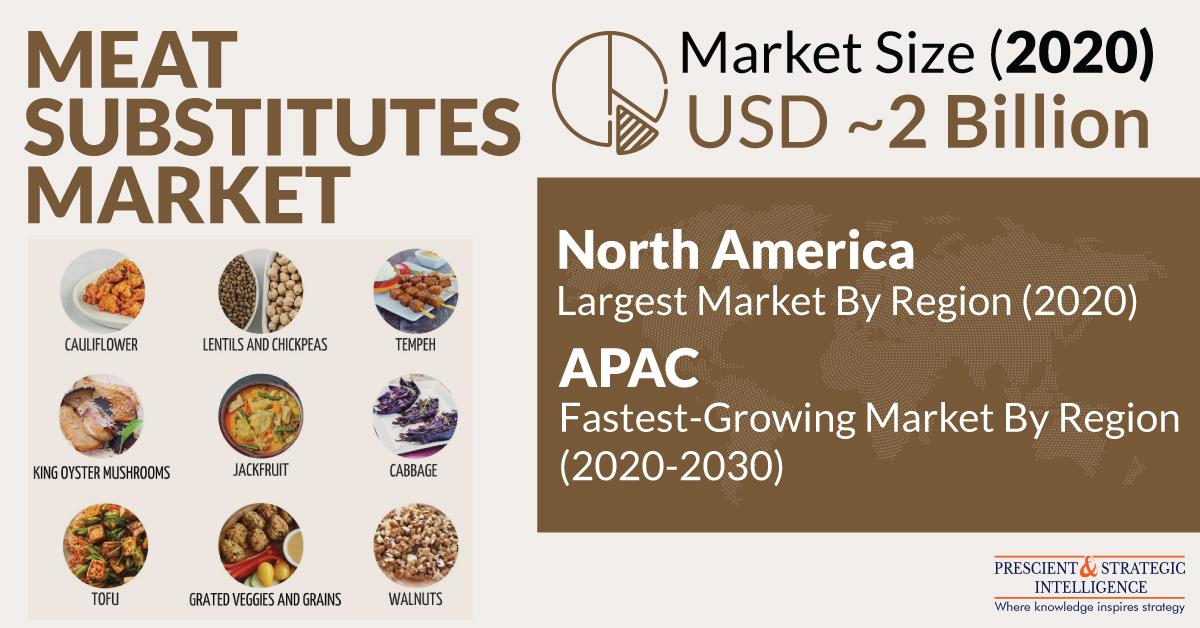
There is a lot of talk about meat substitutes all over the world. Many people have moved toward the consumption of meat alternatives, because of the fascination for vegan diets and also because of the introduction of strict laws related to the production of animals. In this blog, we will keenly focus on soy as an alternative of meat.
Soy is commonly used as an alternative for meat in the modern world. Cooking and drying of soybeans under pressure produces texturized soy protein. This provides a structure to the soy, quite similar to meat and with which numerous products can be made. Tofu is also made from soybeans and can give the texture of meat.
Report description: https://www.psmarketresearch.com/market-analysis/meat-substitutes-market
What is the Nutritional Value of Soy?
The most convincing reason to use soy as meat substitutes is that it is a rich source of protein. That means it has all the essential amino acids; these are the ones that can’t be made by the body itself and which hence should be obtained from the diet.
The soybean is an outstanding source of vegetable protein. It also aids to decrease bad cholesterol, thus refining the health of the blood vessels and offering protection against CVDs. Fresh soy is also a source of fiber, iron, calcium, vitamin C, and vitamin B1. Edamame is not processed but eaten often as a snack.
Meat Production and GHG
The process of consuming livestock meat emits greenhouse gases. As stated by the Food and Agriculture Organization of the UN, around 14% of the greenhouse gases released are from the livestock industry, 65% are resulting from cattle. The main factor is "burp." Cattle burp has methane, having a greenhouse effect of twenty-eight times that of CO2. Apart from that, a large amount of CO2 is generated when transporting livestock feed and the procedure of removing livestock excrements.
Now, crisis is snowballing because of disasters, thought to be the effects of climate change, soy, which has little environmental impact, is attracting more consideration than meat, as it produces fewer quantities of GHG.
Soy is Good for Environment as Well
Harvesting soybeans only takes 12 to 13% that of raising cattle. So, it can be easily said that, soy can produce the same quantity of food as beef with less water. Furthermore, there are no doubts of removing excrement, and GHG are less than 85% of producing beef.
From this, it can be said that soy, which has recreated the texture of meat, is more environment friendly than meat. It can decrease the burden on the environment by plummeting the number of times the meat is consumed and substituting with soy, a great alternative of meat.
Coming to a Conclusion
The increasing concerns with regards to food security and sustainability has had a positive influence on the demand for meat substitutes all over the world. With strict regulations regarding cruelty against animals also is contributing to the people increasingly moving toward them.Why is Soy Such a Good Meat Alternative? There is a lot of talk about meat substitutes all over the world. Many people have moved toward the consumption of meat alternatives, because of the fascination for vegan diets and also because of the introduction of strict laws related to the production of animals. In this blog, we will keenly focus on soy as an alternative of meat. Soy is commonly used as an alternative for meat in the modern world. Cooking and drying of soybeans under pressure produces texturized soy protein. This provides a structure to the soy, quite similar to meat and with which numerous products can be made. Tofu is also made from soybeans and can give the texture of meat. Report description: https://www.psmarketresearch.com/market-analysis/meat-substitutes-market What is the Nutritional Value of Soy? The most convincing reason to use soy as meat substitutes is that it is a rich source of protein. That means it has all the essential amino acids; these are the ones that can’t be made by the body itself and which hence should be obtained from the diet. The soybean is an outstanding source of vegetable protein. It also aids to decrease bad cholesterol, thus refining the health of the blood vessels and offering protection against CVDs. Fresh soy is also a source of fiber, iron, calcium, vitamin C, and vitamin B1. Edamame is not processed but eaten often as a snack. Meat Production and GHG The process of consuming livestock meat emits greenhouse gases. As stated by the Food and Agriculture Organization of the UN, around 14% of the greenhouse gases released are from the livestock industry, 65% are resulting from cattle. The main factor is "burp." Cattle burp has methane, having a greenhouse effect of twenty-eight times that of CO2. Apart from that, a large amount of CO2 is generated when transporting livestock feed and the procedure of removing livestock excrements. Now, crisis is snowballing because of disasters, thought to be the effects of climate change, soy, which has little environmental impact, is attracting more consideration than meat, as it produces fewer quantities of GHG. Soy is Good for Environment as Well Harvesting soybeans only takes 12 to 13% that of raising cattle. So, it can be easily said that, soy can produce the same quantity of food as beef with less water. Furthermore, there are no doubts of removing excrement, and GHG are less than 85% of producing beef. From this, it can be said that soy, which has recreated the texture of meat, is more environment friendly than meat. It can decrease the burden on the environment by plummeting the number of times the meat is consumed and substituting with soy, a great alternative of meat. Coming to a Conclusion The increasing concerns with regards to food security and sustainability has had a positive influence on the demand for meat substitutes all over the world. With strict regulations regarding cruelty against animals also is contributing to the people increasingly moving toward them.1 0 Reacties 0 Aandelen
© 2025 Grunnboek · Dutch